Central European Music Industry Report
Sponsoring requests
Foreword
Executive summary
1
The Music Industry
1.1
Music among creative and cultural industries
1.2
The three income stream model for the music industry
1.2.1
The changing musician career
1.3
Central European market characteristics
1.3.1
Purchasing power
2
The Recording Industry
2.1
Central European market characteristics
2.1.1
Main income sources
2.1.2
Demand and home copying
2.2
Investments in the Recording Industry
2.2.1
Recording artists
2.2.2
Recording budgets
3
Copyright stream: composers, lyricist and publishers
3.1
Who are the authors?
3.2
Repertoire growth
3.2.1
Collectively managed repertoire
3.2.2
Film synchronization, grand rights
3.2.3
Production and games
4
Live music stream
4.1
Live music audience
4.1.1
Sub-national differences
4.2
Production of live performances
4.2.1
Music clubs and small venues
4.2.2
Arenas
4.2.3
Festivals
4.3
Concert economy
4.3.1
Number of performances required for full-time musician career
4.3.2
Electronic music
4.3.3
Concert expenditure
4.3.4
Tour profitability
4.3.5
Venue popularity and seasonality: Bratislava, Budapest, Prague, Vienna, Zagreb.
4.3.6
Small venues
5
Music Industry in the Wider Economy
5.1
Employment
5.1.1
Spillovers
5.1.2
Youth employment
5.2
Gross value added
5.2.1
Taxes paid
6
Sponsor case study
7
Conclusion
7.1
Business outlook
7.2
Business development
7.3
Policy recommendations
References
Powered by CEEMID
Central European Music Industry Report
Chapter 3
Copyright stream: composers, lyricist and publishers
3.1
Who are the authors?
3.2
Repertoire growth
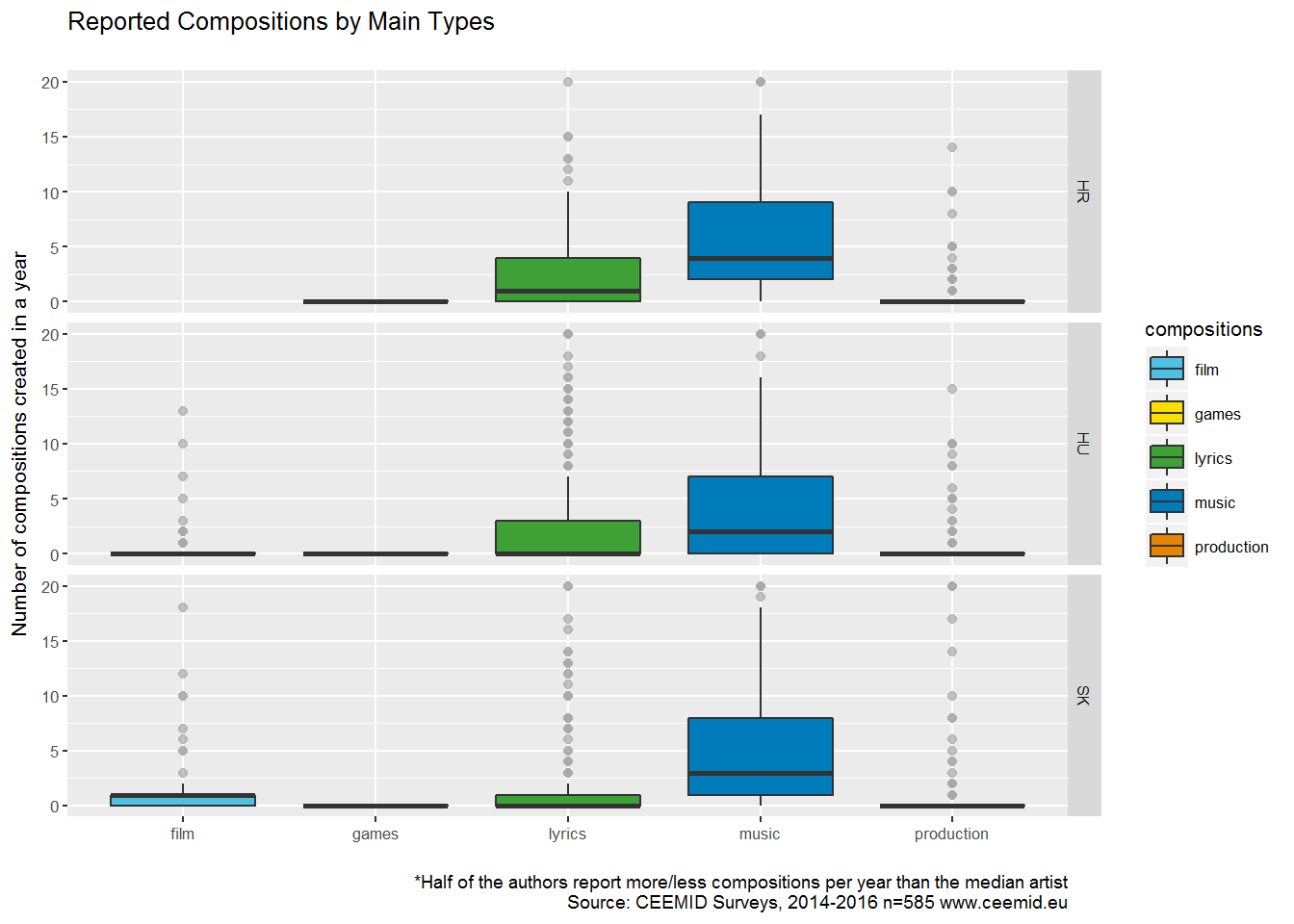
(#fig:composition_volumes)Reported composition volumes in the region
3.2.1
Collectively managed repertoire
3.2.2
Film synchronization, grand rights
3.2.3
Production and games